
Rusty sills: can your car survive a roadside tyre change?
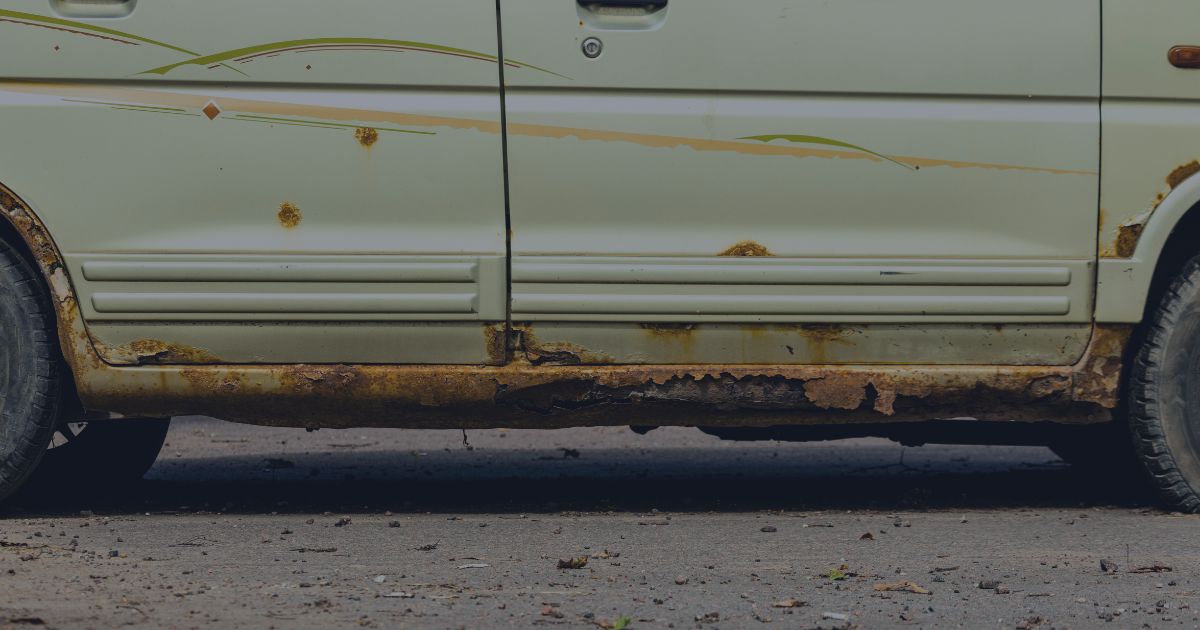
Rusty sills: can your car survive a roadside tyre change?
Hole in the Sill & Safety: Would Your Car Survive a Roadside Wheel Change? A Technical Breakdown
Have you ever looked along the lower edge of your car, spotted a rust blister and thought: “It’s just cosmetic — I’ll sort it before I sell it”? If you have, this article is for you — and without exaggeration, it could one day protect your health or even save your life.
Most drivers think of the sill (often called the rocker panel in US terminology) as a trim-like strip under the doors — something that gets dirty and occasionally scuffs your trousers. But from an automotive engineering perspective, the sill is one of the most important longitudinal structural members in the lower body. It has a direct impact on body stiffnessand on how the car protects you in an accident.
In this report, prepared with input from the experts at EasyParts.online, we’ll cover:
the real “anatomy” of sill corrosion,
why expanding foam “repairs” are dangerous,
and why ignoring rust can turn a routine roadside tyre change into a genuinely life-threatening situation.
The Safety Principle: Why the Sill Is the “Spine” of Your Car
To understand the risk, you need to understand how modern cars are built. Most passenger vehicles today use a monocoque / unibody structure. Unlike old body-on-frame designs — where the body sat on a separate chassis — a unibody car relies on its body shell to carry loads. That means the sills, pillars (A/B/C), floorpan and reinforcementsare all load-bearing components.
The Body as a 3D Framework
Think of your car as a three-dimensional framework. The sills act like the lower chords. They play a major role in torsional rigidity — the car’s resistance to twisting.
When one wheel hits a kerb, you drive over uneven ground, or the car is parked on a slope, twisting forces try to distort the shell. Healthy sills resist those forces. Severely corroded sills don’t — and the symptoms are often dismissed as “old car quirks”:
creaks from interior plastics and seals “moving”,
doors that don’t shut cleanly when the car is parked on uneven ground (door aperture distortion),
in extreme cases, stress cracks in the windscreen near corners.
Side-Impact Protection
The sill matters even more in a side impact. The front and rear of a car have larger crumple zones. The side has far less space between impact and occupants. The sill must act as a strong barrier, helping to prevent intrusion into the cabin and distributing loads into the pillars and floor to preserve the integrity of the passenger cell.
If the sill has been “eaten” by rust, it can’t do that job. Energy is transferred far more directly into the occupant area, sharply increasing the risk of serious injuries — particularly to the pelvis and internal organs. When the lower structure loses integrity, the shell can literally collapse or fold in ways it was never designed to.
Sill Anatomy: What’s Actually Rusting?
A car sill is typically a closed box section. Its strength comes from multiple layers working together:
Outer sill skin (repair panel)
the visible outer section,
commonly around 0.8–1.0 mm thick,
crucial for “closing” the box section. A hole breaks continuity, which drastically reduces section strength.
Inner reinforcement (sill reinforcement / rocker reinforcement)
the hidden structural core,
often 1.5–2.0 mm and sometimes higher-strength steel,
ties into the A/B/C pillars and forms the backbone of the jack point / jacking point area.
Inner sill / floorpan edge
closes the structure towards the cabin and integrates with the floor.
Here’s the catch: corrosion often starts inside the box section. The outside may look “not too bad” — maybe a few bubbles — while the reinforcement inside is already compromised or gone.
The Real-World Scenario: Night, Rain, and a Jack That Punches Through
This is the key point that many people underestimate. We’re not talking about theoretical MOT advisories. We’re talking about a credible scenario that can happen to anyone.
The Setup
It’s dark. It’s raining. You’re tired and stressed. You’re on a hard shoulder, lay-by or narrow verge with limited visibility. You get a puncture. You need to change a wheel.
The Failure Chain
You take the factory scissor jack and place it at the jacking point. That point is designed to transfer load into reinforced structures. As you lift, the load concentrates sharply — often 400–500 kg on that single point depending on vehicle weight distribution.
If the internal reinforcement has rotted away, the load no longer transfers into the structure. Instead, it bears onto thin, corroded outer skin:
you hear a cracking/creaking sound (internal structure failing),
as the tyre leaves the ground, the metal buckles and tears,
the jack head punches into the sill “like butter”,
the car drops violently in a fraction of a second.
Health Consequences
This is where it becomes serious:
Crush injuries: hands, legs — even your head — can end up under the vehicle if you’re working at the wheel.
Fatal risk: there are documented cases where drivers have died after a vehicle slipped off a jack.
Limb injuries: crushed fingers, hands or feet trapped between the wheel and arch are common in jack-slip incidents.
The conclusion is blunt: a hole in the sill is a trap you’ve set for yourself. Is risking your life worth saving a few hundred pounds on proper metal repair?
The Financial Fallout (Even If You Jump Clear)
Even without injury, the costs can be brutal:
Body damage: the jack can destroy the sill, deform the lower door edge, damage the wing area and even distort the floor.
Suspension/brake damage: the car can drop onto the brake disc or arms, bending parts and damaging lines.
Recovery costs: a car “sitting on its belly” is hard to lift with a basic jack — you often need professional roadside recovery equipment.
Why Sills Rust — and the Most Common Repair Mistakes
Sills live in the harshest zone of the car:
front wheels blast water, grit and stones into the area like a sandblaster,
winter road salt and grit accelerate corrosion dramatically.
But the worst enemy is trapped moisture inside the sill:
blocked drain points and trapped debris mean water sits inside the box section,
corrosion then progresses from the inside out.
The Expanding Foam Myth
On the used-car market, you still see “repairs” where people fill sills with expanding foam. This is dangerous and destructive:
Hygroscopic: foam absorbs and holds water against steel, accelerating corrosion.
Chemical issues: some foams can promote corrosion or trap contaminants.
Fire/toxicity hazard: when welding, foam is highly flammable and releases toxic fumes.
Any competent body shop will treat foam-filled sills as a serious red flag.
The EasyParts Approach: Why Galvanised Steel Matters
When structural corrosion is involved, the repair path matters. The market is flooded with cheap panels made from untreated mild steel with only transport primer. Many will start rusting again after the first winter.
EasyParts.online focuses on durability and safety:
Galvanised steel repair panels: galvanising provides sacrificial protection — even if paint is scratched, zinc corrodes first and protects the steel underneath.
Accurate pressing and fitment: good fit reduces filler use and helps restore structural integrity.
System-level repairs: replacing only the outer skin is a mistake if the inside structure has failed. Proper repair means restoring reinforcements and the jacking point structure, not just making it look tidy.
Doing It Properly: A Short Workshop-Grade Checklist
If you’re planning a repair (or briefing your body shop), this is the minimum standard:
Diagnosis
tapping/probing to find solid metal,
mandatory inspection of inner reinforcements and jacking point integrity.
Removal
drill out spot welds and cut precisely,
don’t “hack” into sound structure with a grinder.
Inner structure restoration
rebuild or replace corroded reinforcement,
never weld a new outer sill onto rotten inner metal.
Welding
plug welding to replicate factory spot welds.
Corrosion protection (critical)
outside: epoxy primer, stone-chip/underbody coating, paint,
inside: cavity wax injection to creep into seams and overlaps.
Summary: Don’t Gamble With Your Life for the Sake of Delay
Sill corrosion isn’t just cosmetic. It’s structural engineering and family safety.
Remember:
a repair panel might cost a few hundred pounds,
recovery + secondary damage after a jack failure can cost thousands,
your health is priceless.
Don’t wait until the car “gives way” at the roadside. If you see bubbling, soft metal, or hear crunching when pressure is applied — act. Choose quality, galvanised repair panels from EasyParts.online and restore the stiffness your car was designed to have. It’s an investment that pays back every time you make it home safely.