
Mercedes and Rust – Which Models to Buy or Avoid?
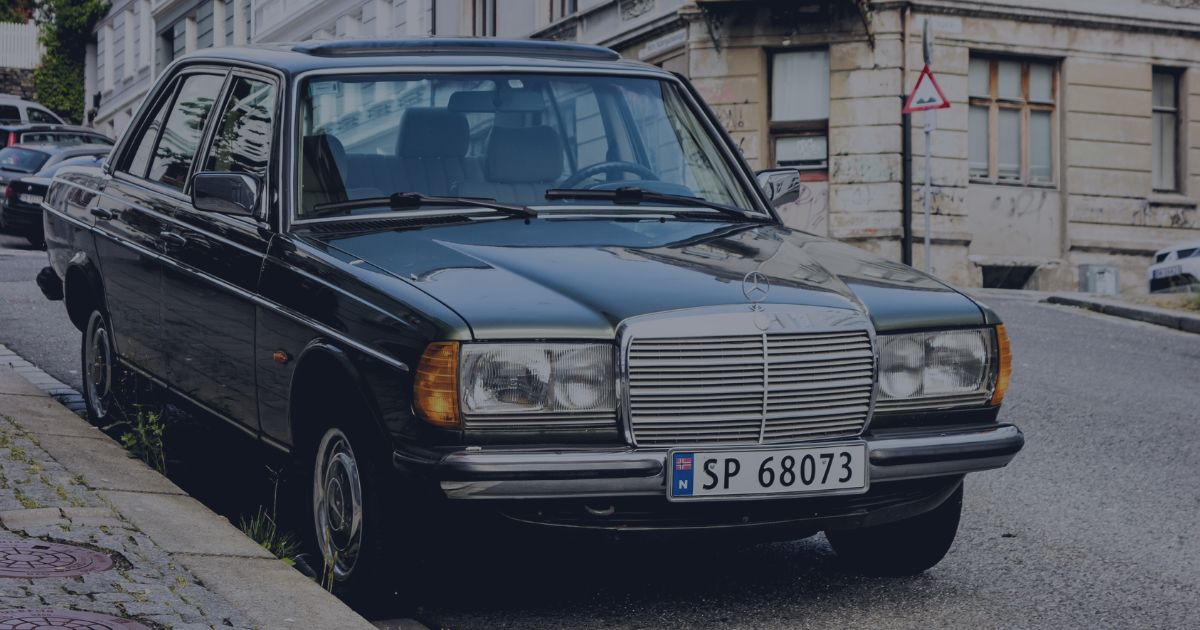
Mercedes and Rust – Which Models to Buy or Avoid?
For decades, Mercedes-Benz has been synonymous with durability and solid German engineering. It’s a brand that evokes tales of million-mile taxis, family heirlooms passed down through generations, and "bulletproof" models that seem to survive just about anything thrown their way.
But if you’re considering buying a used Mercedes in the UK, especially with our damp climate and salted winter roads, it’s worth knowing that the relationship between Mercedes and rust is… complicated.
It’s a story of brilliant engineering, a cost-cutting crisis in the 90s, and a long road to winning back customer trust. And if you don’t know which Mercedes belongs to which era, you could easily turn your dream car into a money pit of welding and filler.
The Reliability Myth – The Golden Age of Mercedes Engineering
To understand why the rust scandals of the 90s came as such a shock, we need to go back to a time when Mercedes was ruled by engineers, not accountants. Until the early 90s, the company lived by a philosophy known as “over-engineering” – designing cars to last far beyond what was necessary.
Back then, the goal wasn’t just to build a car that could survive the warranty period. It was to create machines that could run for decades without breaking a sweat.
Two models stand out as icons of this era: the legendary Mercedes W124 (nicknamed “The Tank” by British enthusiasts) and the compact but charismatic W201, better known as the 190.
Mercedes W124 – The Tank That Still Rolls
Built between 1984 and 1997, the W124 is widely regarded as one of the most durable Mercedes models ever produced. Everything about it – from its body panels to interior trim – was built to a standard that would make many modern cars blush.
That said, even these tough old Mercs aren’t immune to rust after 30+ years. The difference is, corrosion developed slowly and predictably, which made it manageable.
Common rust spots on UK W124s include:
The jacking point covers on the sills (where rubber grommets trap moisture),
Lower front wing edges near the bumper,
Inner and outer wheel arches,
Door bottoms, especially on versions with wide trim panels that trap water.
Mercedes W201 – A Compact Classic With Strong Bones
The W201, produced from 1982 to 1993, shared many of the same build principles. Its weak spot? The seam under the front wings, where factory-applied seam sealer would degrade over time and let in moisture.
Still, what made both the W124 and W201 great was their predictability. Rust didn’t come as a nasty surprise – mechanics knew exactly where to look, and owners could plan ahead.
Corrosion back then was simply a sign of age and use – not poor design. That reliability helped Mercedes earn its status as a manufacturer of cars that could outlive multiple owners.
The Dark Days – When Accountants Took Over in Stuttgart
Things took a sharp turn in the mid-90s. Mercedes, under increasing pressure to cut production costs and meet tightening environmental regulations, made two major mistakes at once.
First, they switched from tried-and-tested solvent-based paints to water-based alternatives, which were still underdeveloped at the time. Second, they cut corners on rust protection processes — just when UK roads were getting ever more saturated with salt in winter months.
The result? A perfect storm of poor corrosion resistance and plummeting reputation.
Mercedes W210 – The Poster Child of the Rust Crisis
The W210 E-Class (known in the UK as the "E-Class with the googly eyes") was introduced in 1995 and looked modern and refined on the surface. But beneath the sleek lines lurked a serious issue: rust. And lots of it.
Incredibly, some W210s in Britain showed visible rust just two to three years after leaving the showroom — a disaster considering many were still under warranty.
Problem areas included:
Front wings,
Door edges,
Sills,
Boot lid (especially around the number plate trim and lock),
And even the roof rails on estates.
The most dangerous rust issue? Corrosion of the front spring perches. If these failed while driving, the coil spring could collapse through the arch — causing a complete loss of control. Not something you expect from a luxury saloon.
W202 and W220 – Not Just an E-Class Problem
The rot wasn’t limited to the E-Class. The C-Class (W202, built from 1993 to 2000) was just as vulnerable, with rust creeping across wheel arches, under door seals, along the sills, and even on suspension mounts.
Even worse, the flagship S-Class (W220, 1998–2005) wasn’t spared. You’d expect top-tier quality from a car that cost as much as a London flat, but buyers were finding corrosion on door bottoms and wheel arches — sometimes within a few years of ownership.
And then there was the W638 Vito van. Built in Spain and clearly to a different standard, it became infamous for rust so severe that some examples had visible body perforation after just 4–5 years. For a brand that built its name on engineering excellence, this was a major embarrassment.
Climbing Out of the Rust Hole – First Signs of Improvement
By the early 2000s, Mercedes had clearly realised things were spiralling out of control. Angry customers, plummeting resale values, and brutal press coverage (especially in places like the UK, where rust spreads fast) forced the brand to act.
The first major step toward redemption came with the launch of the W211 E-Class in 2002 — the successor to the rust-plagued W210.
Compared to its predecessor, the W211 was a leap forward. While not entirely rust-proof, it was far more resistant. Mercedes had improved their painting processes, added better underbody protection, and took corrosion more seriously during manufacturing.
Still, for British buyers, especially those outside of the mild southern counties, issues could arise — particularly on estate models, where rust might still show up around the rear tailgate or underneath the car.
Post-2007 – The Real Comeback of Quality
The true turning point? Around 2007.
This is when Mercedes brought in major changes to both bodywork design and manufacturing. Models like the W204 C-Class and W212 E-Class marked a full return to Mercedes’ premium build quality.
These cars featured:
Fully galvanised steel body panels,
Advanced multi-layer paint protection,
Oxsilan surface treatment (a modern alternative to phosphating),
And tighter control over weld and seam sealing.
Thanks to these updates, UK owners finally had cars that didn’t start rusting just from looking at a salty winter road.
Of course, no car is truly immune — and one well-known Achilles’ heel on the W204 was rear subframe corrosion (often called “rusty cradles”). But in most cases, Mercedes addressed these issues with recalls or goodwill repairs, especially on cars with full dealer history.
The bottom line? Mercedes had regained control — and buyers once again had reasons to trust the badge.
Fighting Rust – Prevention and Repair
No matter which Mercedes model you go for, one thing stays the same: rust never sleeps. Especially not in the UK, where rain, road salt, and coastal air combine into the perfect cocktail for corrosion.
So how do you keep the dreaded tin worm at bay?
How to Protect Your Mercedes Bodywork in the UK
Regular washes, especially underneath
Washing the underbody during winter is crucial. Salt buildup is a major cause of corrosion, and British roads are heavily salted for much of the year.Wax your paintwork
A layer of quality wax helps repel moisture and grit, adding an extra layer of defence against the elements.Fix chips and scratches early
A tiny stone chip might not seem like a big deal, but if left untreated, it’s an open invitation for rust to start working from the inside out.
Anti-Corrosion Treatment – A Smart Investment for Older Mercs
If you own a 90s Mercedes (or an 80s classic), investing in professional rustproofing can make a huge difference — both in terms of longevity and resale value. A proper treatment in the UK typically includes:
Removing plastic covers and thoroughly cleaning the underside,
Mechanically and chemically treating any existing rust,
Applying a rust converter and epoxy primer,
Coating vulnerable areas with wax- or polymer-based flexible sealants,
Injecting cavity wax into box sections like sills and chassis rails.
Done properly, this can add many more winters to your car’s life — and make that MOT test far less stressful.
Body Repairs – Quick Fix or Proper Job?
If rust has already set in, it’s not just a matter of covering it up.
A lot of budget body shops will offer cheap “patch and paint” jobs — grinding the rust off, filling it with filler, and spraying over it. But in UK conditions, that fix usually lasts a year… maybe two, tops.
The only proper way to fix body rust is to cut out the affected metal and weld in a new section. It’s more costly, yes — but it’s the only solution that guarantees the rust won’t be back by next MOT.
Good News: Panels for Classic Mercs Are Readily Available
If you’re restoring a classic like the W124 or W201, you’re in luck. Replacement panels — including sills, floor sections, arches, and wings — are widely available and affordable.
Shops like easyparts.online stock high-quality repair panels designed specifically for these older Mercedes models. This makes proper restoration achievable, whether you’re doing the job yourself or leaving it to a trusted welder.
What Really Affects the Value of a Classic Mercedes?
When it comes to classic Mercedes models, mechanics are rarely the issue. Engines and gearboxes from the 80s and 90s were built to last and are relatively simple to maintain.
What really dictates value — especially in the UK collector scene — is the condition of the bodywork.
Body Condition = Real Value
A W124 or W201 with solid, rust-free body panels will often sell for double or triple the price of one with bubbling arches and patched sills — even if the mechanicals are identical.
That’s because:
Bodywork repairs are costly in the UK,
DIY welding is a challenge (and not for everyone),
MOTs are strict on structural rust (especially sills, floors, and suspension mounts),
And rust-free cars are becoming harder to find.
So if you’re restoring a Merc with the long term in mind, professional welding and anti-corrosion protection are real investments. They don’t just keep the car solid — they protect and even increase its future value.
Easyparts – Making Restoration Possible (and Affordable)
The UK classic car scene is booming, and Mercedes models from the 80s and 90s are finally getting the love they deserve.
Shops like easyparts.online (with localised UK delivery options) offer a growing selection of replacement body panels, from inner arches to outer sills — meaning restoring a W124 or W201 no longer requires hunting scrapyards or importing panels from Germany.
That makes proper restoration not only possible, but also economically viable — especially if you plan to keep the car for years to come.
Final Verdict – Which Mercedes Is the Right Pick?
Mercedes has had quite the journey: from the glory days of indestructible over-engineered saloons, through a painful quality crisis, and finally back to premium status.
So, if you're hunting for a used or classic Mercedes in the UK, here’s the rundown:
✅ Safest bet:
Post-2007 models like the W204 C-Class and W212 E-Class — they offer modern tech, excellent rust resistance, and are widely available in the UK second-hand market.
???? True classics:
W124 and W201 from the golden age — brilliant for hobbyists and collectors, if you can find one with clean bodywork or are ready to invest in proper rust repairs.
⚠️ Risky bargains:
W210, W202, W220 and early Vitos (W638) — cheap upfront, but potentially very expensive in terms of welding and restoration. Great if you’re experienced with bodywork or buying as a donor/project car.
Mercedes Rust Resistance – Model Comparison Table
One Final Tip – Always Inspect the Bodywork
When buying a used Mercedes in the UK — especially a 90s or early 2000s model — never rely solely on service history or MOTs. Get the car up on a ramp. Rust can hide in:
Jacking points and sills,
Rear subframes,
Floor pans,
Inner arches.
Even the best engines won’t save you from £2,000 worth of welding.
In Summary
Rust doesn’t care about the badge on your bonnet — but how Mercedes dealt with it over time makes all the difference.
After 2007? You’re mostly safe.
Before that? You need to be smart.
During the 90s? Only buy with your eyes and a magnet.
With the right knowledge, tools, and access to quality replacement panels, even a rusty classic Merc can be brought back to life — and be proudly driven on UK roads for decades to come.